A strong brand isn’t just about a polished logo or a catchy tagline. It’s about clarity, consistency, and how well a company shows up across every interaction. The difference between a strong brand and a weak one is often surprisingly visible – once you know what to look for.
Clarity Over Complexity
A strong brand is easy to understand. Within seconds, you should be able to tell:
- What the company does
- Who it’s for
- Why it matters
There’s no overexplaining, no vague language, no trying to be everything at once.

A weak brand, on the other hand, often hides behind buzzwords. It sounds impressive, but unclear. You’re left guessing what the company actually offers or why it’s different.
In a world where attention is limited, clarity isn’t a nice-to-have. It’s what gets people to stay.
Consistency Across Every Touchpoint
A strong brand feels the same wherever you encounter it.
Website, social media, sales presentation, event presence – everything speaks the same language, visually and verbally. It doesn’t feel like separate pieces created at different times, but like one coherent experience.
This kind of consistency builds trust, because people know what to expect and feel confident they are engaging with the same brand every time.

Weak brands tend to drift. The tone changes. The visuals don’t quite match. Messaging depends on who created it. This inconsistency doesn’t just look unpolished, it creates doubt. If the brand feels fragmented, trust becomes harder to build.
A Clear Point of View
Strong brands don’t try to appeal to everyone. They take a position.
They know what they stand for, what they focus on, and just as importantly – what they don’t. This makes their communication sharper, more confident, and easier to connect with.
By being clear and decisive, they also make it easier for the right audience to trust them and feel aligned with what they represent.

Weaker brands often play it safe. They avoid strong statements, dilute their messaging, and end up blending in with competitors. But in crowded markets, neutrality is forgettable.
Design That Supports the Message (Not Replaces It)
Good design is important. But in strong brands, it serves a purpose.
Visual identity reinforces the message. It helps people recognize the brand, understand its tone, and feel a certain way about it. It’s not just “looking good,” it’s communicating something meaningful.
When design and message work together, they strengthen each other and create a clearer, more memorable impression.

With weaker brands, design is often treated as the solution rather than the tool. There might be visually appealing elements, but they don’t connect to a clear strategy. The result? Something that looks nice but doesn’t stick.
Aligned Teams, Not Just Aligned Assets
A strong brand isn’t only visible externally, it’s lived internally.
Marketing, sales, leadership, and product teams all understand the same story. They speak in similar ways, prioritize the same things, and move in the same direction.
This alignment shows up in how the brand behaves, not just how it looks. When everyone is aligned, messaging becomes clearer and the brand experience feels more cohesive at every touchpoint.

In weaker brands, alignment breaks down behind the scenes. Marketing says one thing, sales says another. The result is confusion – not just internally, but for customers too.
Real Presence, Not Just Campaigns
Strong brands are not built through isolated campaigns. They are built through consistent presence.
They show up regularly, with a clear voice, across channels. Not every piece of content needs to be groundbreaking, but it should feel like it belongs to the same brand world.
Continuity and consistency is what builds recognition over time and keeps the brand relevant beyond individual moments.
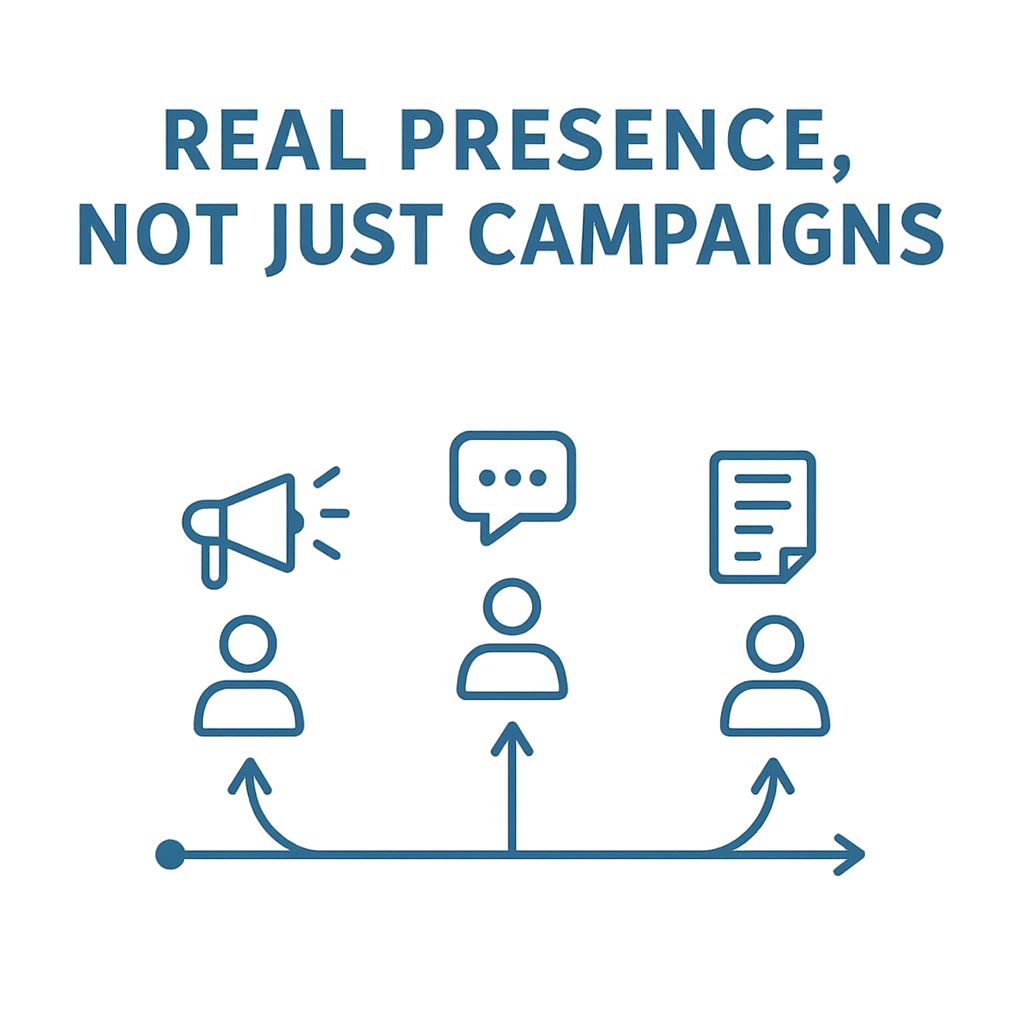
Weaker brands often rely on bursts of activity – big campaigns followed by silence. Without continuity, even strong ideas lose momentum.
So, What Does “Strong Brand” Really Mean?
A strong brand isn’t louder. It’s clearer.
It isn’t more complicated. It’s more focused.
And it doesn’t rely on single touchpoints – it builds a connected experience over time.
Ultimately, you can recognize a strong brand not because it tries to impress you, but because it makes things easy:
- Easy to understand
- Easy to recognize
- Easy to remember
And that’s what makes it powerful.